News Flash — June 22, 2026
Immigration Enforcement Roundup
The Everglades Detention Site
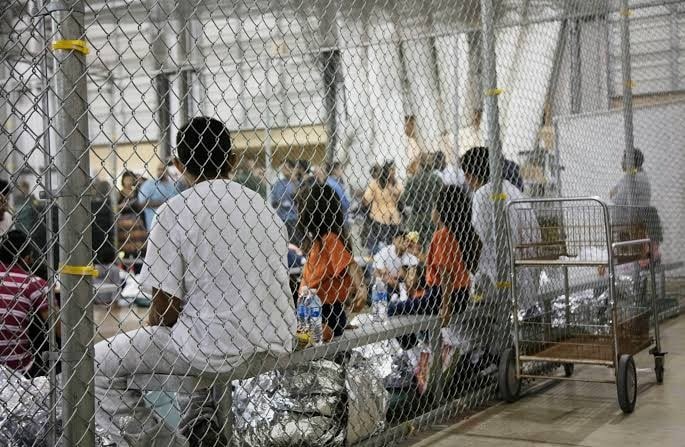
The Everglades detention center known as "Alligator Alcatraz" currently holds no detainees. Detained individuals were transferred to other detention centers without any notification to the detainee's legal representatives. According to an immigration attorney with the Sanctuary of the South, she only learned her clients had been transferred when they stopped appearing at hearings.
The Department of Homeland Security (DHS) claims detainees were moved as a hurricane-season safety precaution. However, reports suggest contractors were told as early as May that the facility would close, while DHS Secretary Markwayne Mullin has said there are no immediate plans for a permanent shutdown.
Immigration advocates question the official explanation. Florida's governor has long described the site as temporary, and U.S. Representative Maxwell Frost noted in May that detainee numbers were already declining. Cost may also be a factor, with the facility reportedly costing about $1 million per day to operate while Florida awaits most of the federal reimbursement it has requested.
The facility has also faced legal challenges. Environmental groups sued in June 2025, arguing that officials bypassed required environmental reviews. The Miccosukee Tribe of Indians of Florida joined the case, citing concerns about nearby tribal communities and the protected Big Cypress National Preserve. A federal judge initially ruled for the plaintiffs, but an appeals court reversed that decision in April, finding that Florida — not the federal government — controls the facility because it built and operated it independently.
That ruling relied in part on the fact that Florida had not received federal funding. Yet weeks later, the state received its first federal reimbursement payment of $58 million, part of the roughly $608 million it claims it is owed. While this does not change the ruling, it may strengthen future arguments from the Tribe and environmental groups.
For now, the facility is legally free to operate. This week's closure was not ordered by the courts but was instead a decision by state and federal officials. Whether the shutdown is temporary or permanent remains unclear.
A separate lawsuit filed by the Center for Biological Diversity alleges violations of the Clean Air Act related to the facility's generators and lighting towers. That case remains pending. Meanwhile, advocates argue that emptying the facility does not erase concerns about the treatment of detainees or the broader questions of transparency, environmental impact, and accountability raised by its operation.
The Milwaukee Mosque Leader's Release
After nearly three months in detention, Salah Sarsour has been released following a June 18 ruling by Judge James Patrick Hanlon. Sarsour, a lawful permanent U.S. resident since 1998 who identifies as a stateless Palestinian, was detained based on two convictions from an Israeli military court dating to 1989 and 1995. His attorneys argue those convictions are being used as a pretext to target him for his advocacy on Palestinian rights.
The judge ruled that Sarsour had raised a substantial claim that his detention may have been retaliatory and therefore unconstitutional. Hanlon noted that non-citizens are protected by the First Amendment and found sufficient evidence to question whether Sarsour's speech played a role in his detention, particularly given the timing of his arrest and the government's longstanding awareness of the decades-old convictions.
The court also found that Sarsour posed little flight or safety risk. He has lived in the United States for more than three decades, has no U.S. criminal record, and received significant community support. He was released without bond under three conditions: reside in Wisconsin, attend court proceedings, and participate in his immigration case.
The ruling does not determine whether Sarsour's detention was unlawful or whether he will ultimately be deported. Those questions remain pending.
What Should You Do If You Receive a Notice From DHS?
Our firm has recently received an increasing number of calls from individuals who have received notices from DHS requiring them to appear before an immigration court. If you receive such a notice, it is important to take immediate action.
The first step is to gather and organize all of your immigration-related documents. These may include your entry documents, visas, passports, work permits, prior immigration applications, notices received from immigration authorities, and any documents filed on your behalf.
The second step is to contact an experienced and reputable immigration attorney as soon as possible. An attorney can review your immigration history, evaluate your legal options, and confirm whether you have a scheduled hearing before an immigration judge.
Most importantly, you must attend your immigration hearing and, whenever possible, do so with qualified legal representation.
Some individuals mistakenly believe that avoiding a court hearing will allow them to remain in the United States longer. In reality, failing to appear can have serious consequences. If you do not attend a scheduled hearing, an immigration judge may issue an "in absentia" removal order, meaning that you can be ordered removed from the United States in your absence. Such orders can create significant legal obstacles and may complicate future efforts to obtain lawful immigration status or permanent residency.
For these reasons, it is never advisable to ignore correspondence from DHS or fail to appear for a scheduled court date. Prompt action can make a substantial difference in protecting your rights and preserving your immigration options.
If you or a family member has received a notice from DHS, contact our office today for a free initial assessment. We are available to review your situation and help you understand your legal options.
For a free fifteen-minute immigration consultation please call our offices.
305-859-0872