
News Flash — June 9, 2026
Children in Immigration Detention
Children in U.S. immigration detention remain at the center of one of the country's most urgent human-rights challenges. Despite decades of litigation and oversight, thousands of minors continue to cycle through federal custody each year, often in conditions that advocates describe as unsafe, traumatic, and inconsistent with federal court standards.
Children in Immigration Detention Today
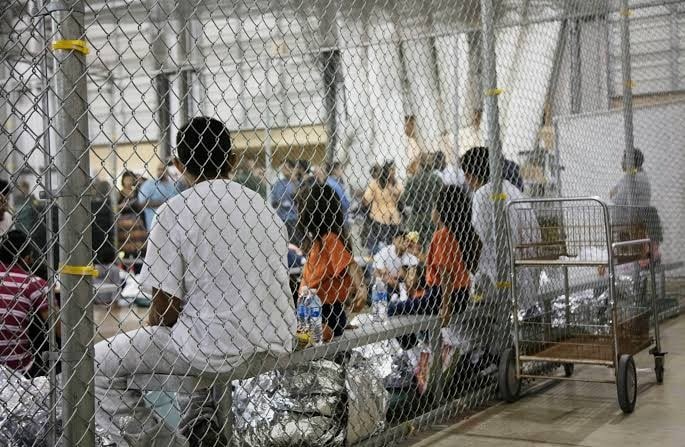
Children are held in several types of federal custody:
- Customs and Border Protection (CBP) holding cells ("hieleras"): designed for 72 hours but often used far longer.
- Immigration and Customs Enforcement (ICE) family detention centers: facilities that hold parents and children together, including the South Texas Family Residential Center "Dilley" in Texas.
- Office of Refugee Resettlement (ORR) shelters: facilities where unaccompanied minors are transferred after Border Patrol processing.
Current numbers (2025–2026):
Data obtained through the Deportation Data Project, a coalition of academics and lawyers collecting federal immigration records through public records requests, reveals:
- More than 6,200 children detained by ICE since the start of Trump's second term (January 2025).
- Daily ICE child detention populations reached more than 550 in January 2026 before declining to fewer than 90 by mid-March 2026.
- On an average day between January 2025 and March 2026, ICE held 25 children aged 3 or younger in custody.
These figures do not include the much larger number of children held by CBP and ORR, whose populations are tracked separately and often go under-reported.
Conditions Inside Detention Facilities
Accounts from families have documented a daily reality that child welfare experts describe as harmful to children's development and wellbeing in South Texas Family Residential Center in Dilley. Children are living in situations where facility lights remain on 24 hours, making normal sleep impossible. Food has repeatedly been reported as inadequate and, in documented cases, contaminated. Access to clean drinking water has been inconsistent. Requests for medical attention, even for serious conditions, have gone unanswered for hours or days, and children with pre-existing illnesses have been left without the specialized care they require.
In one documented case by Human Rights First and RAICES in their April 2026 report, a young girl from Colombia was accidentally struck in the face by a facility custodian's mop handle. Despite developing severe pain, swelling, and progressive hearing loss, detention staff provided only ibuprofen and eye drops. By the time an outside specialist was finally brought in and diagnosed her with ocular trauma requiring weeks of treatment, the family had been deported. As per the report, she continues to suffer from unresolved eye damage, chronic headaches, and panic attacks triggered by the sight of police or authority figures.
In another case documented, a 10-year-old U.S. citizen girl still recovering from brain surgery was held in what a formal civil rights complaint filed by the Texas Civil Rights Project described as "a hot, dirty, brightly lit cell" after CBP agents stopped the family at an immigration checkpoint in February 2025. Despite the child's medical condition being known to CBP's own medical team, she was denied transfer to a hospital for pediatric care before being deported to Mexico alongside her undocumented parents and three other U.S. citizen siblings.
Psychological Impact
It is important to bear in mind that many of these children come from countries where they have already experienced violence, instability and displacement. As a result, the trauma they carry with them before reaching the US border is already quite significant. Detention does not put an end to this, but rather adds a new source of stress to what they have already endured, and studies show the toll this takes on them.
A 2025 systematic review published in The British Journal of Psychiatry synthesized data from 21 studies covering 9,620 children held in immigration detention across eight countries, including the U.S. Meta-analysis found 42.2% for major depression and 32.0% for PTSD among detained children. The review's conclusion was direct: no period of detention can be deemed safe, as all immigration detention is associated with adverse impact on children's mental health. Beyond psychiatric diagnoses, studies documented disrupted development, sleep difficulties, somatic complaints, self-harm, and suicidal ideation — with severity increasing the longer and more restrictive the detention.
None of this is new information. In 2016, the Department of Homeland Security's advisory committee concluded that harmful effects of detention on children are well established and recommended that family detention be discontinued. In 2026, children are being held in the same type of facilities, under the same conditions, now expanded to their largest scale.
The Flores Settlement: The Foundation of Child Protection
The Flores Settlement is a 1997 federal consent decree that sets nationwide minimum standards for the detention, treatment, and release of immigrant children. It remains legally binding today.
Its core protections include:
- Children must be held in safe and sanitary conditions.
- They must be placed in the least restrictive setting.
- They must be released "without unnecessary delay" to a parent, relative, or sponsor.
- If not released, they must be transferred to a state-licensed, non-secure facility.
- They have the right to a bond hearing.
In May 2025, the Justice Department filed a motion in the U.S. District Court for the Central District of California to terminate the Flores Settlement. The government argued that federal regulations and a 2022 Supreme Court ruling had rendered it unnecessary. It was not the first time — courts rejected a similar motion in 2019 during Trump's first term.
In August 2025, the U.S. District Judge denied the motion. The administration appealed, and the case is now before the Ninth Circuit Court of Appeals, where oral arguments have now taken place. State attorneys, U.S. senators, and advocacy organizations joined the fight on the side of the children filing amicus briefs in support of the Flores Settlement, warning that terminating it would leave children with no enforceable legal protection against indefinite detention.
Closing Thoughts
Child detention is not simply a policy debate — it is a question of child welfare, due process, and human dignity. Children's best interest must be paramount in all enforcement decisions pertaining to them. The Flores Agreement remains the strongest legal safeguard these children have. But its standing is not guaranteed: the case is now before the Ninth Circuit, and the outcome will determine whether there will continue to be any minimum level of protection required for children in federal custody. The work of lawyers, advocates, and watchdog organizations has never been more critical, nor has public attention.
For a free consultation please call us
305-859-0872